
ABCDs of Learning at Abbey College Cambridge
22nd October 26
Every lesson, every day: how we teach at Abbey College Cambridge
Great teaching should not depend on which classroom you happen to walk into. Andy Humphris, Vice Principal (Academic), explains the ethos behind learning at ACC, and the simple framework that brings it to life in every lesson.
Ask any family what they hope for from a school, and the answer is rarely about one brilliant lesson. It is about consistency: knowing that a student will be taught well on a wet Tuesday in November (as I write this) just as surely as on an open day. That belief is at the heart of how we teach at Abbey College Cambridge.
Our ethos: High Quality Teaching and Learning
Our academic ethos has a straightforward name: High Quality Teaching and Learning, or HQTL. Behind it is a simple belief. Every student, whatever their starting point and whatever their first language, should be able to access a demanding curriculum and be genuinely challenged by it.
We do not see those two aims as pulling in opposite directions. Making learning accessible does not mean making it easier. It means removing the barriers that stop capable students from showing what they can do.
For an international college, this matters a great deal. Many of our students are mastering complex ideas in physics, economics or history in their second or third language. They are ambitious, often aiming for the world’s most competitive universities, and they deserve teaching that is both rigorous and clear.
From ethos to everyday: ABCD
An ethos is only as good as what happens in the classroom. To make sure ours is lived rather than simply written down, lessons at ACC are planned around four shared principles, and it is against these same four principles that we look at teaching across the college.
We call them ABCD.
A – Accessible resources
Lesson materials are clear, well structured and uncluttered, with key vocabulary explained and supported. Students are given helpful starting points, such as worked examples and sentence starters, which are gradually removed as their confidence grows. Everyone works on the same challenging content; it is the support that adapts, never the ambition.
B – Balanced questioning
In a good lesson, nobody gets to sit back and let someone else do the thinking. Our teachers spread questions across the whole class and pitch them at different levels, from quick recall to deeper “why” and “what if” questions. Students soon learn that every voice is expected, and every voice is valued.
C – Cognitive overload, managed
Research into how memory works tells us that people learn best when new information arrives in manageable steps. Lessons begin by recalling what students already know, new ideas are introduced one at a time, and teachers show how something is done before students try it for themselves. Crucially, teachers check understanding before moving on, so the lesson moves at the pace of learning rather than the pace of the clock.
D – Dual coding
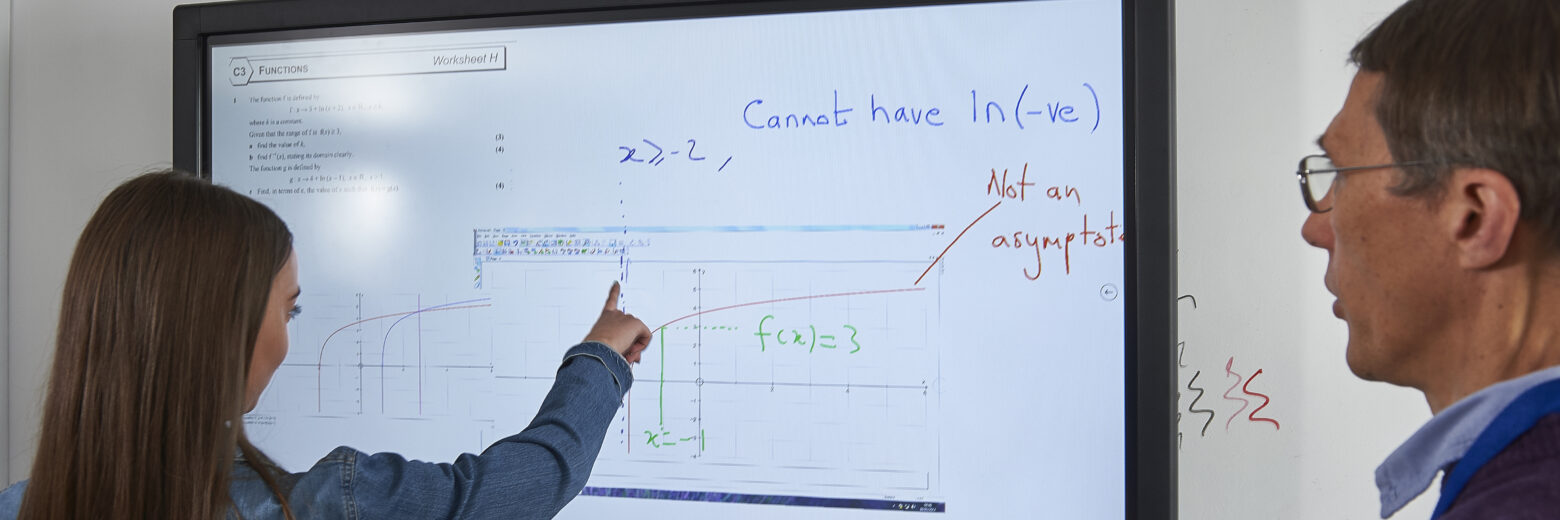
Words and pictures together are more powerful than either alone. Our teachers pair explanations with diagrams, timelines, flowcharts and annotated models, often building them live on the board as they talk. Students learn to do the same in their own notes, a habit that pays real dividends when exam revision comes around.
Why it works
None of these ideas is a gimmick. Each is grounded in well-established educational research into how students learn and remember, and together they give every department at the college a shared language. A student moving from a maths lesson to an English lesson to a chemistry lab should recognise the same habits: clear materials, questions that include them, learning that builds step by step, and explanations they can see as well as hear.
That consistency is deliberate. Departments set aside dedicated time throughout the year to develop their ABCD practice, and teachers visit one another’s lessons to share what is working well.
What it means for students and families
For students, ABCD means lessons that feel purposeful and achievable, even when the material is hard. It means being expected to think, and being supported to succeed.
For parents, guardians and the agents who work with our families, it offers reassurance that the quality of teaching at ACC is not left to chance. It is built into the way every lesson is designed, every day.
If you are visiting Abbey College Cambridge, we would be delighted to show you ABCD in action. And if you already know one of our students, ask them about it. We think you will enjoy hearing them explain it in their own words.
Andy Humphris
Vice Principal (Academic), Abbey College Cambridge